Self-Care Isn't Selfish: Why Daily Oil Massage Is Essential for Busy Women
I used to wear my exhaustion like a badge of honor. Busy meant important. Tired meant productive. Taking time for myself felt indulgent, even selfish, when there were emails to answer, deadlines to meet, people who needed me.
Then my body forced me to stop. Chronic tension headaches. Insomnia. Skin that looked as depleted as I felt. My doctor's advice? "You need to manage your stress." But how, when the demands weren't going away?
The answer came from an unexpected place: Ayurveda. Specifically, the practice of Abhyanga, daily self-massage with oil. It sounded too simple to work. Ten minutes a day? That would fix burnout?
It didn't fix everything. But it changed everything. Here's why daily oil massage isn't selfish. It's essential.

The Myth of Selfish Self-Care
We've been conditioned to believe that caring for ourselves is selfish. That our needs come last. That rest is something we earn only after we've given everything to everyone else.
This is a lie. And it's making us sick.
The Cost of Neglecting Yourself
When you constantly prioritize others over yourself:
- Your stress hormones stay elevated (chronic cortisol damages health)
- Your immune system weakens (you get sick more often)
- Your sleep suffers (leading to more stress, more health issues)
- Your skin ages faster (stress accelerates aging)
- Your mental health declines (anxiety, depression, burnout)
- Your relationships suffer (you can't pour from an empty cup)
Self-care isn't selfish. It's survival.
What Is Abhyanga?
Abhyanga is the Ayurvedic practice of self-massage with warm oil. It's been practiced for over 5,000 years as a foundational health ritual.
In Ayurveda, Abhyanga is considered a form of Sneha, which means both "oil" and "love." The practice is literally an act of self-love, of nourishing your body from the outside in.
Traditional Practice
Traditionally, Abhyanga involves:
- Warming oil (sesame, coconut, or herbal blends)
- Massaging the entire body for 10 to 20 minutes
- Using long strokes on limbs, circular motions on joints
- Practicing daily, ideally in the morning before bathing
Modern Adaptation
For busy women, the practice can be simplified without losing its benefits:
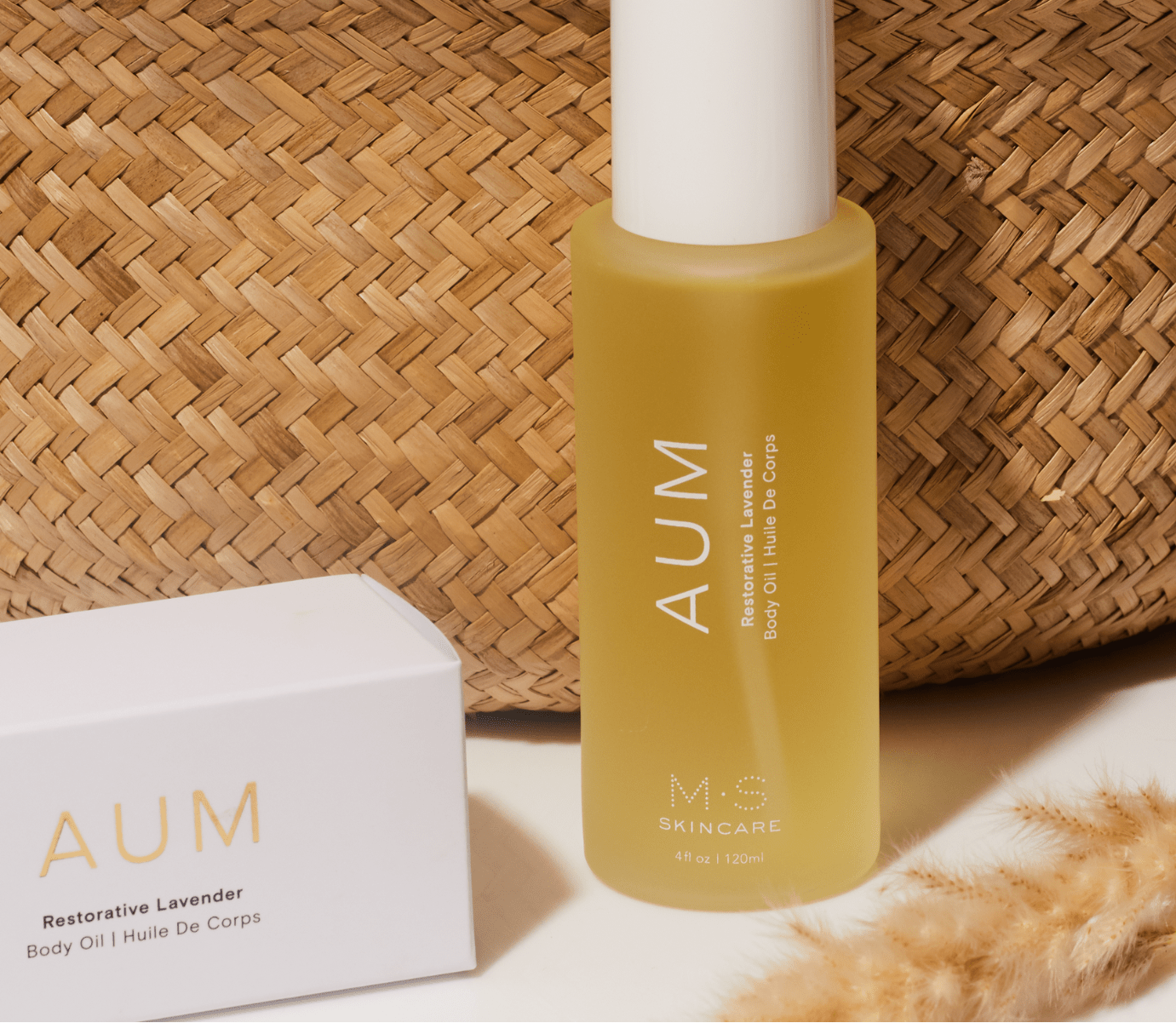
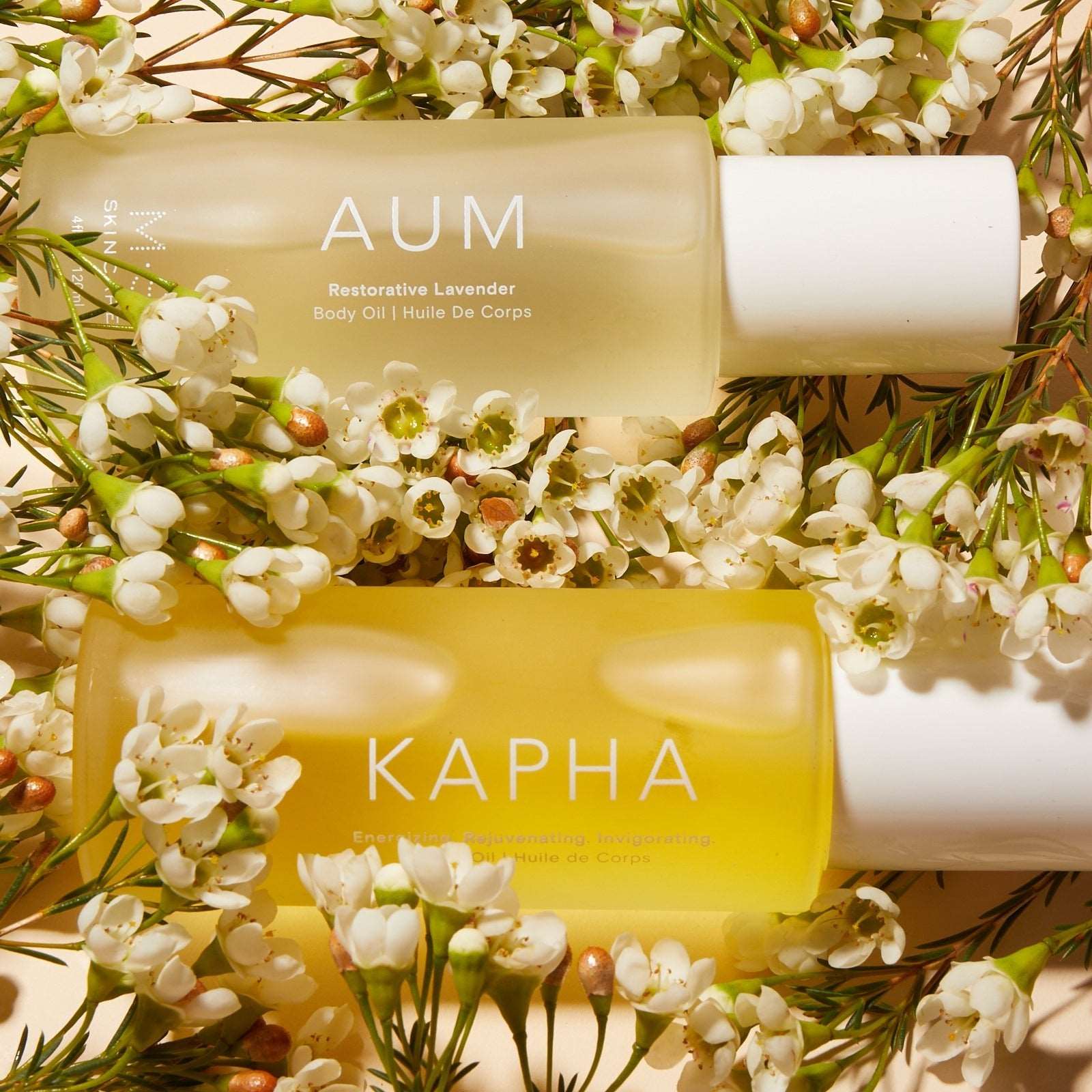
- Use a high-quality body oil like AUM (no warming needed)
- Practice for 5 to 10 minutes (morning or evening)
- Focus on areas of tension and stress
- Make it a non-negotiable part of your routine
The Science: Why This Works
Reduces Cortisol and Stress
Research on massage therapy shows:
- Self-massage reduces cortisol by 20 to 30%
- Increases serotonin and dopamine (feel-good neurotransmitters)
- Activates the parasympathetic nervous system (rest and digest)
- Lowers blood pressure and heart rate
Improves Sleep Quality
Studies demonstrate that regular massage:
- Increases delta waves (deep sleep brain waves)
- Reduces time to fall asleep
- Improves overall sleep quality
- Reduces nighttime waking
Supports Immune Function
Regular self-massage has been shown to:
- Increase white blood cell count
- Improve lymphatic drainage (removes toxins)
- Reduce inflammation markers
- Strengthen immune response
Enhances Skin Health
Daily oil application:
- Repairs and strengthens skin barrier
- Increases hydration and elasticity
- Delivers active botanicals deep into skin
- Improves circulation for a healthy glow
Why Busy Women Need This Most
You're Carrying Too Much
If you're a busy woman, you're likely:
- Managing multiple roles (professional, caregiver, partner, friend)
- Putting everyone else's needs before your own
- Running on stress hormones and caffeine
- Feeling guilty when you take time for yourself
- Experiencing physical symptoms of burnout
This isn't sustainable. And deep down, you know it.
You Deserve 10 Minutes
Ten minutes. That's all this practice requires. Not an hour at the spa. Not a weekend retreat. Ten minutes of intentional self-care.
If you can't give yourself 10 minutes, something needs to change.
How to Start Your Daily Practice
Choose Your Time
Morning (Energizing):
- Practice before showering
- Sets a grounded, intentional tone for the day
- Helps you show up calmer and more centered
Evening (Calming):
- Practice after showering, before bed
- Signals to your body that it's time to rest
- Improves sleep quality
Choose whichever fits your schedule. Consistency matters more than timing.
The 10-Minute Practice
Minute 1 to 2: Ground and Breathe
Dispense 2 to 3 pumps of AUM into your palms. Rub hands together. Bring hands to your face and take three deep breaths of the lavender scent. Set an intention: "This is my time. I deserve this."
Minute 3 to 4: Legs
Long, firm strokes from ankles to thighs. Move toward the heart to support lymphatic drainage. Notice where you're holding tension.
Minute 5 to 6: Arms and Hands
From wrists to shoulders. Massage each finger. Release the tension from typing, holding, doing.
Minute 7 to 8: Abdomen and Chest
Gentle circular motions on the abdomen (clockwise). Soothing strokes on the chest. Breathe deeply.
Minute 9 to 10: Neck and Shoulders
This is where most women hold stress. Use firm pressure. Massage the base of the skull. Release the weight you've been carrying.
Make It Non-Negotiable
Treat this like any other essential appointment:
- Put it in your calendar
- Set a reminder
- Don't skip it when you're busy (that's when you need it most)
- Protect this time like you would a meeting or deadline
What Changed for Me
Week 1: I Felt Guilty
The first week was hard. I felt guilty taking 10 minutes for myself. My mind raced with all the things I "should" be doing instead.
But I committed. And by day 7, the guilt started to fade.
Week 2: I Felt Calmer
I noticed I was less reactive. Traffic didn't enrage me. A difficult email didn't ruin my day. I had a buffer between stimulus and response.
My sleep improved. I fell asleep faster and woke up more rested.
Week 3: I Felt Stronger
My skin looked better. My body felt more resilient. But more than that, I felt stronger emotionally. Like I had something to give because I was finally filling my own cup.
Week 4: I Felt Transformed
By week four, the practice was non-negotiable. It was the anchor of my day, the thing that kept me grounded when everything else felt chaotic.
I wasn't less busy. But I was less burned out. And that made all the difference.
The Permission You're Waiting For
You don't need permission to take care of yourself. But if you're waiting for it, here it is:
You are allowed to prioritize your well-being.
You are allowed to take 10 minutes for yourself.
You are allowed to say no to things that deplete you.
You are allowed to rest without earning it.
You are allowed to care for yourself with the same devotion you give to everyone else.
Self-care isn't selfish. It's how you survive. It's how you thrive. It's how you show up as the best version of yourself for the people and work you love.
Start Today
You don't need to wait for the perfect time. You don't need to have it all figured out. You just need to start.
Ten minutes. One practice. Today.
Your body is waiting. Your well-being is waiting. You are worth it.