
Hormones April 22, 2026
You Are Not Imagining It: Sleep in Perimenopause Is Different

You used to sleep. Not perfectly, but reliably. You fell asleep, you stayed asleep, you woke up feeling like yourself. And then, somewhere in your late thirties or forties, that changed. You started waking at 3am. You started lying awake with your heart racing for no reason. You started dreading bedtime because you knew what was coming.
If this sounds familiar, you are not imagining it. And you are not broken. Your sleep changed because your hormones changed. And the advice you have been given, the sleep hygiene tips, the melatonin, the chamomile tea, was not designed for what you are actually experiencing.
This post is for you.
Perimenopause starts earlier than most people think
Perimenopause, the hormonal transition that precedes menopause, can begin as early as the mid-thirties. Most women are not told this. The average age of onset is 47, but the range is wide, and the symptoms, including sleep disruption, mood changes, and anxiety, often appear years before periods become irregular.
This means many women are experiencing perimenopausal sleep disruption without knowing that is what it is. They are told they are stressed, or anxious, or not practicing good sleep hygiene. They are not told that their progesterone is dropping, their cortisol rhythm is shifting, and their hypothalamus is becoming hypersensitive to temperature changes.
What is actually happening when you wake at 3am
The 3am waking pattern is one of the most common perimenopausal sleep complaints, and it has a specific physiological cause. Progesterone, which has a calming, GABA-like effect on the nervous system, declines during perimenopause. As it drops, cortisol becomes relatively more dominant, and it begins rising earlier in the morning than it should. The result is an early, unwanted awakening with a racing mind and an inability to fall back asleep.
This is not anxiety. It is a hormonal cortisol pattern. And it responds to different interventions than anxiety does.
What is actually happening when you have night sweats
Night sweats are hot flashes that occur during sleep. They are caused by the hypothalamus, the brain's thermostat, becoming hypersensitive to small fluctuations in core body temperature. A tiny rise in temperature triggers a full heat-dissipation response: blood vessels dilate, the body sweats, and the nervous system activates. This wakes you up, often drenched, often unable to fall back asleep as your body cools down.
Alcohol, spicy food, a warm bedroom, and synthetic bedding all lower the threshold for hot flashes. Cooling botanicals, temperature-regulating bedding, and a cool sleep environment raise it.
What actually helps
A cooling pre-sleep ritual
A warm bath followed by a cool bedroom is one of the most evidence-backed sleep interventions for anyone. For perimenopausal women, it is even more important. The bath raises core body temperature; stepping out drops it rapidly, mimicking the natural temperature drop that signals sleep onset. Adding cooling Ayurvedic botanicals amplifies the effect.

Surya Cooling Bath Soak is formulated with Ayurvedic herbs specifically chosen to reduce heat in the body and support the nervous system before sleep. It is one of the most targeted products we carry for perimenopausal sleep disruption.
Nervous system grounding through touch
The vagus nerve, which runs from the brainstem through the body, is one of the primary regulators of the stress response. Slow, intentional touch, specifically self-massage with a warm oil, activates the vagus nerve and shifts the nervous system from sympathetic (alert) to parasympathetic (rest). For women whose nervous systems are dysregulated by hormonal change, this is not a luxury. It is a recalibration.

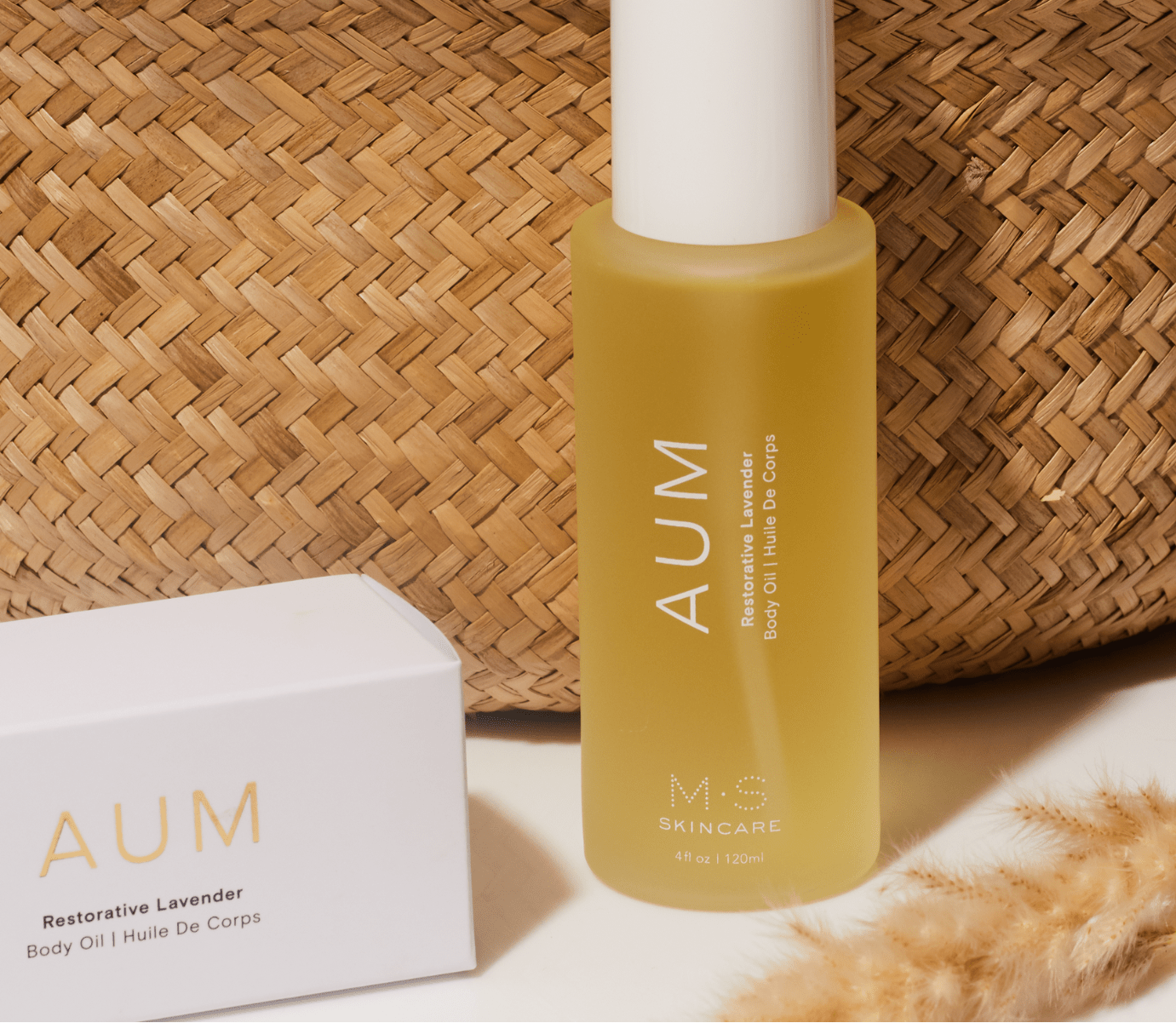
AUM Restorative Body Oil by M.S Skincare is our Ayurvedic evening body oil, formulated with lavender, rose, and kakadu plum for deep nourishment and nervous system support. Apply it slowly before bed. Let the ritual be the signal. This is the product we come back to every night, and the one we hear about most from women navigating perimenopause.
Kava for the racing mind
When the 3am waking comes with a racing mind, the instinct is to reach for melatonin. But melatonin addresses sleep onset, not nighttime waking driven by cortisol and anxiety. Kava, which works directly on GABA receptors, is more targeted for this pattern. It reduces anxiety without sedation and without dependency.

Ease Hawaiian Kava Gummies by Rosebud Woman are formulated specifically for women, with a precise kava dose in a format that is easy to take before bed or when waking in the night.
CBD and CBN for sleep duration
CBD reduces cortisol and supports the nervous system's ability to stay in a restful state. CBN, a lesser-known cannabinoid, has been shown specifically to extend sleep duration and reduce nighttime waking. Together, they address two of the most common perimenopausal sleep complaints: difficulty staying asleep and early waking.

Foria Sleep Capsules combine CBD, CBN, and calming botanicals in a formula designed for sleep quality, not just sleep onset. Take them 45 minutes before bed.
A phone-free bedroom
The anxiety amplification that comes with hormonal transition makes the stimulating effects of screens significantly more disruptive than they were before. A notification at 11pm that you would have ignored at 35 can now trigger a cortisol spike that keeps you awake for hours. The phone needs to leave the bedroom.

The Loftie Clock gives you everything you need from a bedside device, alarm, white noise, gentle light, without any of what you do not: no notifications, no social media, no blue light. It is the simplest way to make a phone-free bedroom actually work.
You deserve better information
Perimenopause is not a disorder. It is a transition. But it is a transition that deserves honest, specific, evidence-informed support, not generic wellness advice that was not written with your biology in mind.
The products in The Sleep Edit and our Menopause and Perimenopause Relief collection are selected with this in mind. Every product earns its place.
Also in this series: Why Menopause Disrupts Sleep and What Actually Helps, Why You Can't Sleep: The Real Reasons and What Actually Helps, and The Nighttime Routine That Actually Works.
Tu ritual te espera







Keep reading
More from the journal
Rosewater Cream September 14, 2026
Why Rosewater Never Left My Routine
Read
sertodo September 1, 2026
How to Clean Copper: Caring for Your Copper Water Pitcher, Cups, and Cookware
Read
Wooden Spoon Herbs August 17, 2026